
Food and everyday life
A food diary that keeps the useful details
Record meals without turning eating into a scorecard. Keep useful food, portion and timing notes to discuss alongside your glucose records.
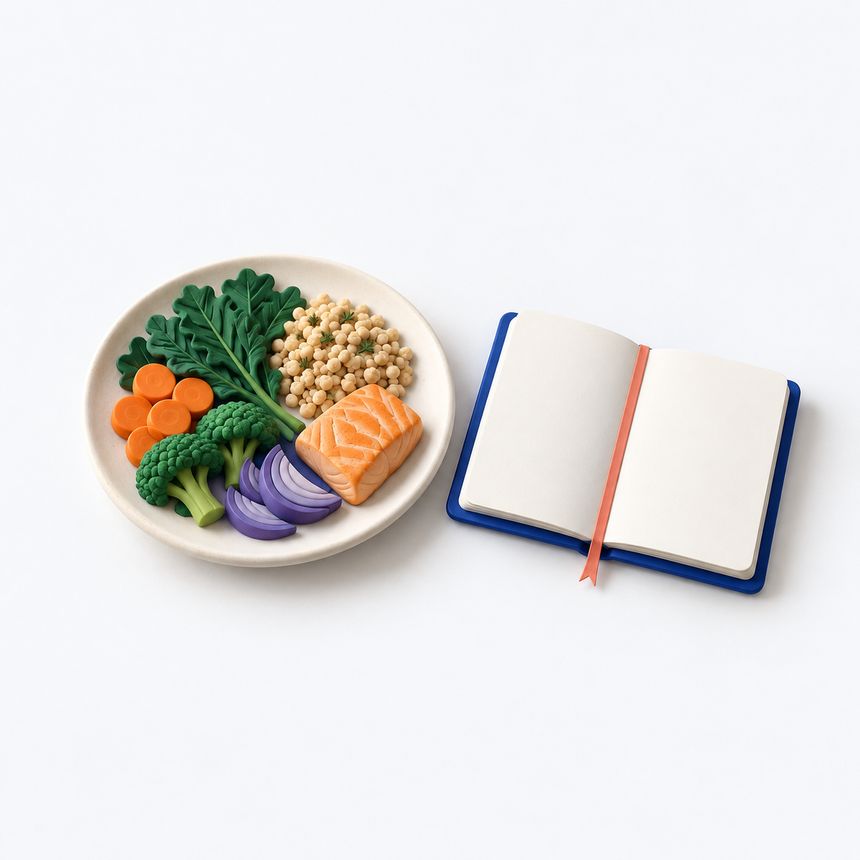
A food diary is easier to use when it answers a few ordinary questions: what did you eat, roughly how much, and when? Those details can make a later conversation about food and diabetes more concrete. You do not need perfect photographs, a different diet or a paragraph about every snack to begin.
A useful entry still makes sense when you read it a few days later. A diary is not a test of whether you ate “well,” and a glucose reading is not a grade for a meal. Start with information you can describe honestly, including anything you are unsure about.
Why food context belongs beside the numbers
Food matters in diabetes because carbohydrates affect blood glucose, and the other foods eaten with them can affect how quickly it rises. CDC explains this relationship. That makes meal context useful, but it does not mean one diary entry can identify the cause of a particular result.
“Lunch” could mean a sandwich at your desk, a shared meal with several dishes or something eaten over an afternoon. A short description keeps those situations from looking identical in your notes. Record the event first; save conclusions and personal dietary questions for a conversation with your care team.
Choose what to note for each meal
A practical entry can include the time, the foods and drinks, and a description of the amount. Use information you actually have: a package size, your share of a prepared dish, a number of pieces or an approximate portion size. If you estimated, say so. False precision makes a note look more reliable than it is.
A note might read: “13:10, lentil soup, one bowl, bread from the café, water; bread amount not recorded.” It is more useful than “healthy lunch” because someone else can understand both the contents and the missing detail.
Keep names consistent when you can. If you write “usual breakfast,” add what that means somewhere you can find it. Update the description when the product or amount changes. A repeated name is only helpful if it still refers to the same thing.
Include the details a photograph might miss
A photograph can remind you what was on the plate, but drinks, sauces, refills and ingredients mixed into a dish may be out of view. Add a brief note for anything you want to remember. “Dressing added after photo” explains more than trying to reconstruct it several days later.
If you share a dish, describe your own portion rather than treating the whole serving bowl as your meal. If you leave part of it, note that too. The meal photo guide covers how to photograph a meal and add the details the camera misses.
Keep observation separate from explanation
You might notice that a familiar meal appears beside different glucose readings on different days. Keep the actual dates, times and units attached. Avoid relabelling the meal “safe” or “bad” on the basis of that comparison. Your notes do not capture every factor that can affect a result.
NIDDK recommends keeping records with context for your care team. Bring questions such as “Which details would help you interpret this?” rather than using the diary to make treatment changes yourself.
Make the record fit real life
Choose a notebook or app you can open without much effort. Glucose and Blood Sugar Track includes a food diary, meal photos and glucose history, so you can keep those records in one place. You can also use a simple written note when that is more practical.
Late entries are fine when you still have the facts. Use the meal’s actual time if you know it, and label estimates instead of inventing missing details. If tracking starts to feel burdensome, discuss which information is worth keeping with the person reviewing it.
Before an appointment, pick a useful period and check whether the notes are readable. The food and glucose appointment checklist helps you prepare. You can then describe your day and ask about anything the entries alone do not explain.
A personal tracking tool, not a medical device. The app does not measure blood sugar or provide medical advice. Review scanned values and food estimates before saving.
Download on the App Store
Meal photos: what to capture and what a picture misses
Use meal photos as memory aids, add useful portion notes, and understand why a nutrition estimate cannot see every ingredient.
↗
How to read a food label beyond the sugar line
Start with the serving basis, distinguish carbohydrates from sugars, and compare packages without treating label numbers as personal targets.
↗