
Understanding food
How to read a food label beyond the sugar line
Start with the serving basis, distinguish carbohydrates from sugars, and compare packages without treating label numbers as personal targets.
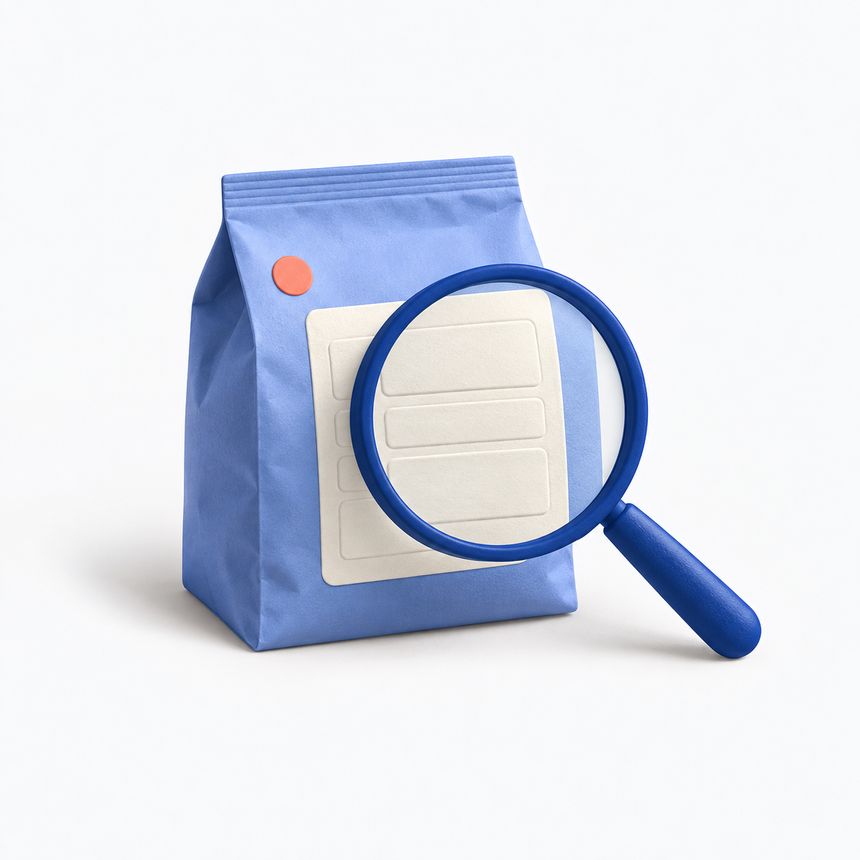
The most useful first question on a food label is “What amount do these numbers describe?” Check that before comparing carbohydrate, sugar or fibre figures. A number on the front of a package tells you little if one product reports a small serving and another reports the whole container.
For someone living with diabetes, understanding the label can make food records and questions more precise. It does not supply a personal carbohydrate allowance or tell you what to eat. This guide uses US label examples and points out where other formats differ.
Find the serving basis before doing arithmetic
On a US Nutrition Facts label, look for serving size and servings per container. The FDA explains that a serving size is not a recommended amount to eat. It is the reference amount used for the numbers underneath.
Here is a fictional label example. A product lists 12 g of carbohydrate per 30 g serving. If the amount recorded is 45 g, the calculation is 45 ÷ 30 × 12 = 18 g of carbohydrate. This is label arithmetic, not a recommended portion or intake target. If you do not know how much you ate, keep that uncertainty rather than presenting the calculation as exact.
Some packages show separate columns per serving and per container. Choose the column that matches what you are recording. Photographing the entire panel, including the serving line, means you will not need to find the packaging again later.
Sugar is part of the picture
On US labels, total carbohydrate includes dietary fibre, sugars and other carbohydrate. Total sugars and added sugars are not extra amounts to add on top of total carbohydrate. The FDA’s carbohydrate guide explains these categories.
If the label says “includes” added sugars, those grams are already within total sugars. Looking only at the sugar line can miss other carbohydrate in a food. Conversely, the presence of sugar does not give you a complete assessment of the food or its place in your own eating plan.
Check the separate fibre entry too. Do not automatically subtract it to calculate a “net carbohydrate” figure for your diary. Label definitions differ between countries, and a calculation used for a personal care plan needs an agreed method.
Compare products on the same basis
Put two similar products side by side and first match the reference amount. Comparing 100 g with 100 g is different from comparing two manufacturer-defined portions of different sizes. Note the actual products and package sizes if you want to discuss that comparison later.
EU nutrition labelling uses a per-100-g or per-100-ml basis, sometimes alongside portion information. The layout and carbohydrate definitions are not identical to US labels. When shopping abroad or using an imported product, read the headings instead of assuming the familiar line order.
Front-of-pack phrases such as “no added sugar” still leave questions unanswered. Turn the package around. Read the nutrition panel and ingredient list, and check the specific information you need. A marketing phrase is not a substitute for those details.
Save enough context to make the numbers useful
For a food diary, keep the product name, the serving basis and the amount you recorded. If you use a different flavour or a new package, check its panel rather than copying the old entry without looking. Similar packaging does not guarantee identical information.
When you record a packaged meal in Glucose and Blood Sugar Track, use the food diary for the meal record and keep the original label if you may need to revisit the calculation. Its optional food scan supplies an estimate; it does not verify the package label for you.
A package label, a home recipe calculation and an estimate from a photograph are different sources. Keep that distinction visible in your notes. The meal photo guide explains the limits of image estimates; the food diary guide shows how to record the missing details without making logging a chore.
Bring specific label questions to your dietitian or care team, especially if you have an individual counting method. The label tells you what is in the food. Your care team can help you understand how those details relate to your individual plan.
A personal tracking tool, not a medical device. The app does not measure blood sugar or provide medical advice. Review scanned values and food estimates before saving.
Download on the App Store
A food diary that keeps the useful details
Record meals without turning eating into a scorecard. Keep useful food, portion and timing notes to discuss alongside your glucose records.
↗
Meal photos: what to capture and what a picture misses
Use meal photos as memory aids, add useful portion notes, and understand why a nutrition estimate cannot see every ingredient.
↗