
Food and everyday life
The diabetes plate method: what the sections mean
Understand the half-and-two-quarters plate guide, which vegetables belong where, and how a meal photo can help you ask more useful food questions.
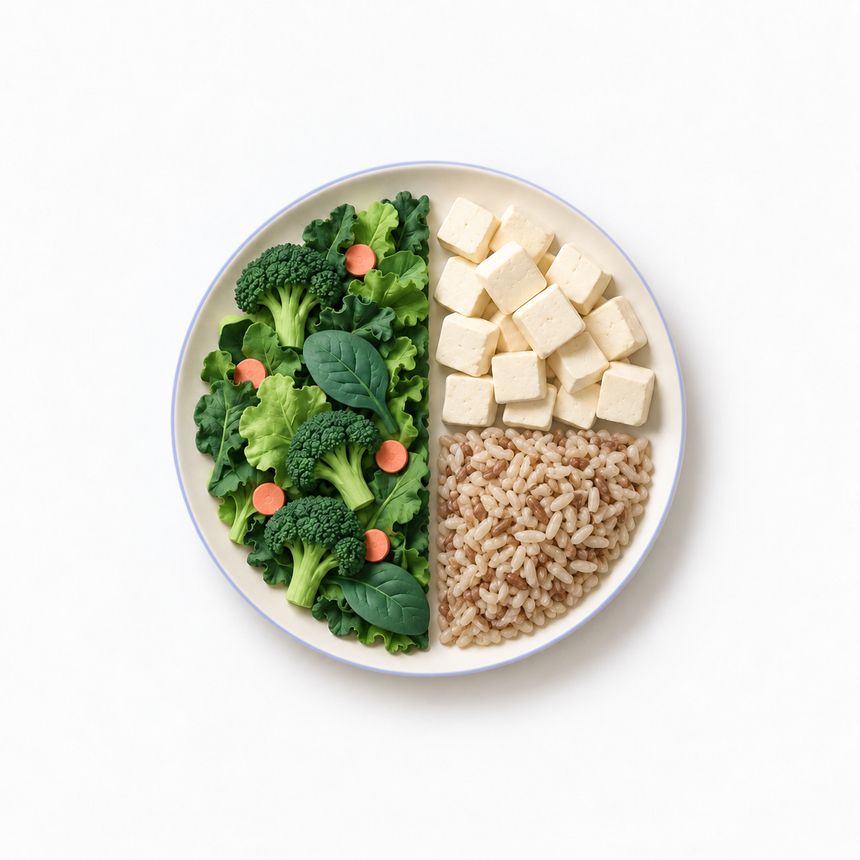
Half the plate for nonstarchy vegetables, one quarter for protein and one quarter for carbohydrate foods: that is the basic diabetes plate method described by CDC. The proportions are 50%, 25% and 25% of the plate’s area. They are a visual way to think about a meal, not percentages of its calories or weight.
Understanding the sections helps when looking at a plate diagram or discussing meals with a dietitian. It also explains why “vegetables” is too broad a label for every food in the largest section.
- ½Non-starchy vegetables
- ¼Protein foods
- ¼Carbohydrate foods
What goes in each section
The CDC plate guide uses a 9-inch dinner plate. It groups foods into these sections:
| Section | Share of the plate | Examples |
|---|---|---|
| Nonstarchy vegetables | Half | Broccoli, leafy salad, green beans |
| Lean protein foods | One quarter | Chicken, tofu, eggs |
| Carbohydrate foods | One quarter | Rice, pasta, potatoes |
Potatoes and peas are starchy vegetables, so they belong with the carbohydrate foods in this model. They are still vegetables; the distinction concerns their role in the plate guide. Fruit, yogurt and milk can also contribute carbohydrates even when they are served beside the plate.
This is an explanation of the model, rather than a requirement to put these particular foods into your next meal. Personal food choices and portions need to fit your health needs and the plan agreed with your care team.
Why the categories can overlap
Foods contain more than one nutrient. Beans, for example, provide protein and carbohydrates. Their carbohydrate content still matters when they are used as a source of protein. NIDDK’s healthy-living guide discusses beans among carbohydrate foods and explains that the body turns carbohydrates into glucose.
That overlap is worth asking about if beans or lentils are a regular part of your meals. A useful question is “How would you apply this guide to the dishes I usually eat?” Your care team can explain how to account for foods that fit more than one group.
The plate picture also cannot tell you a meal’s exact carbohydrate amount. Different foods can cover a similar area while containing different quantities of nutrients. For package information, the food-label guide explains how to keep nutrient figures attached to their stated serving.
A mixed dish does not have to look like a diagram
A stew, curry or bowl of noodles may combine all the ingredients. You can describe the components without rearranging the meal or pretending that you know their exact proportions.
For example, a note might read: “Rice with bean and vegetable stew; cabbage on the side; beans and sauce mixed together.” If you know the ingredients, add them. If you do not know the amount of rice beneath the stew, say so. Keep an uncertain quantity labelled as an estimate.
A plate’s area is also different from the quantity piled onto it. The same visible section can hold a shallow layer or a much larger mound. You cannot determine portion weight from the diagram alone.
Use a photo to make the discussion concrete
Take a picture that shows your whole plate or bowl, then add details that may be hidden: ingredients in the sauce, a separate drink, or how much of the serving you ate. Glucose and Blood Sugar Track’s free food diary and meal photos can keep that description with the meal. The meal photo guide has examples of short notes that explain the image.
Optional Premium AI Food Scan offers estimates. It cannot certify that a meal matches your personal needs or determine exact section proportions from overlapping ingredients.
Bring a familiar meal example when asking how the plate method fits your circumstances. NIDDK recommends working with your health care team on a meal plan that suits you. A photo and an honest description can help explain the meals you actually cook and the questions you have about them.
A personal tracking tool, not a medical device. The app does not measure blood sugar or provide medical advice. Review scanned values and food estimates before saving.
Download on the App Store
Eating out: what to note when you do not know the recipe
Keep useful notes about a restaurant meal even when ingredients and quantities are uncertain, using the menu, your own portion and a photo.
How to log meals from a batch of home cooking
Keep one batch of home cooking connected to the portions you actually ate, with useful ingredient notes and clear limits on estimates.
Food diary for diabetes: what to record, with a free template
A practical food diary example with meals, portions, timing and notes. Download a free printable template or keep your entries in GlucoseTrack.